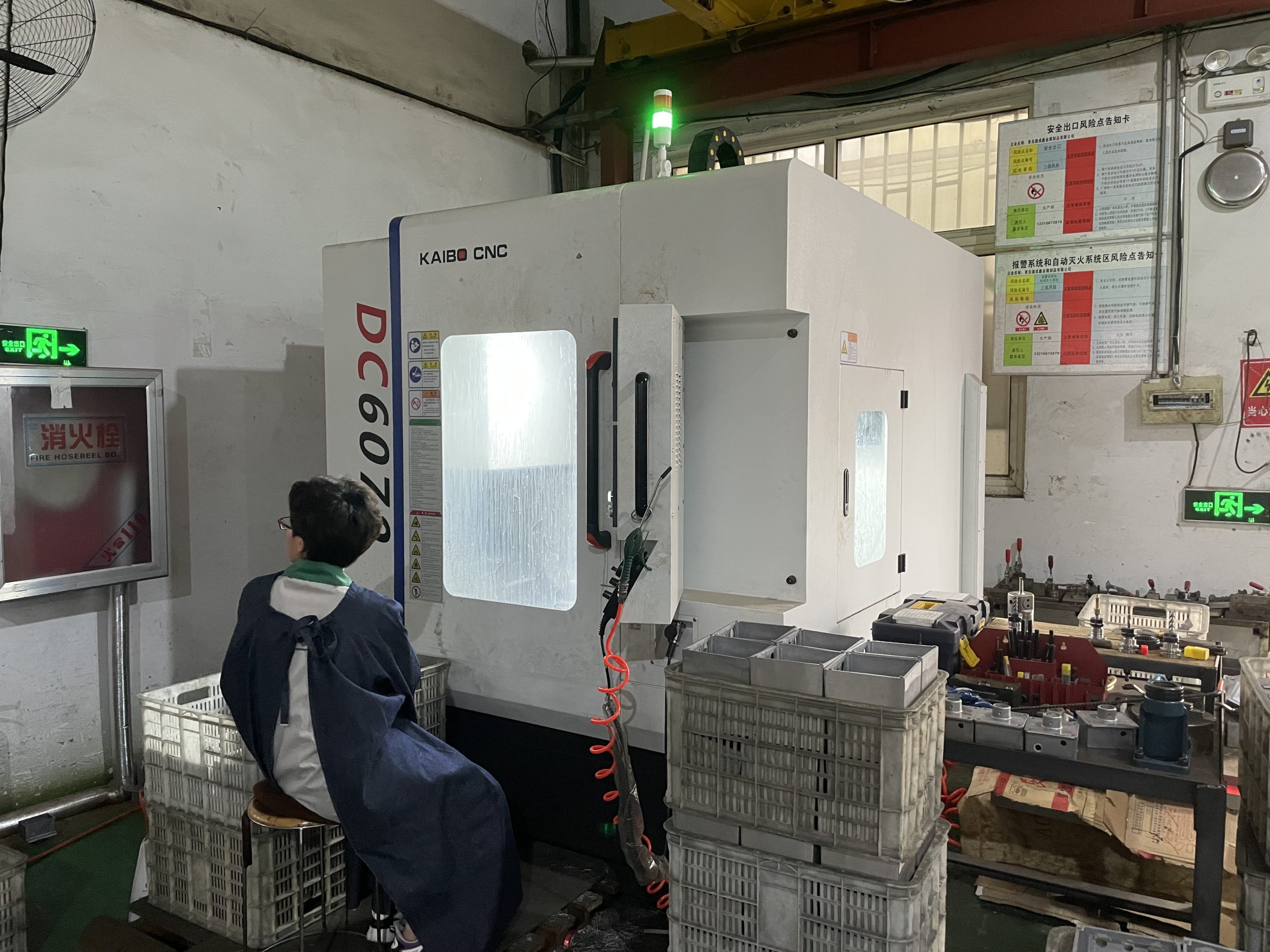
Custom Online CNC Machining Services in China

Enjoy our one-stop high precision CNC machining services, tailored to your project with full material options, multiple finishes, and strict quality control.

  • Rapid Prototypes, Small Volume, or Mass Production
  • Fast Turnaround in Less Than 3 Days
  • Tolerance Down to ±01mm
  • 40+ Materials and 20+Surface Finishes Available
  • ISO 9001 & IATF 16949 Certified Manufacturer

Your Reliable Partner for CNC Machining Services

CEX operates a modern CNC machine shop with 3-, 4-, and 5-axis machining centers, CNC turning, and mill-turn systems, all supported by in-house quality inspection. We machine aluminum, stainless steel, tool steel, brass, copper, and engineering plastics with tight tolerances.

From custom parts to large production runs, we ensure fast turnaround and stable precision. Our machining capabilities serve aerospace, electronics, energy, and automation industries, delivering reliable solutions with accuracy and efficiency.

CNC Machining Capabilities at CEX

Our CNC machining capabilities meet strict industry standards, ensuring consistent accuracy and reliable performance for every part we produce.

ItemsDescription
Precision & TolerancesGeneral Tolerances
Metals: ISO 2768-m
Plastics: ISO 2768-c

Precision Tolerances
Vertical, Horizontal, and Gantry Machining Centers: ±0.01 mm
CNC Lathes: ±0.01–0.02mm
Vertical Lathe: ±0.015 mm
EDM: ±0.01mm
Minimum CapabilitiesMinimum Wall Thickness: ≥1.0mm
Minimum End Mill Size: 0.5-1.0mm
Minimum Drill Size: ≥1.0mm
Minimum Part Size (Milling): 10 × 10 × 5mm
Minimum Part Size (Turning): Ø10 × 10mm
Maximum CapacitiesMaximum Milling Size: ~3000 × 1800 × 1200mm
Maximum Horizontal Milling Size: ~800 × 800 × 900mm
Maximum Vertical Milling Travel: 860–1060mm (X travel)
Maximum Turning Size: Ø800 × 3000mm, load up to 8t
Maximum Vertical Lathe Size: Ø1200 × 500mm (height)
Maximum EDM Size: ~1200 × 800 × 500mm
Equipment Overview3 Sets of Horizontal Machining Centers: 4-axis, supports multi-side machining and double-station efficiency
4 Sets of Gantry Machining Centers: Designed for large-part machining, equipped with side milling heads
5 Sets of Vertical Machining Centers: 4-axis capability, stable for hard materials with through-spindle coolant
2 Sets of CNC Lathes: Handles medium to large shafts with reliable precision
1 Set of Vertical Lathe: Suitable for heavy disc-type parts, ensuring stability and accuracy
4 Sets of EDM Machines: Specialized for complex shapes and fine detail machining

Core CNC Machining Services for Custom Parts

cnc turning parts

Custom CNC Turning Services

At CEX, our CNC turning services cover a wide range of raw materials, from bars to shaped stock. Equipped with high-precision lathes and mill-turn systems, we produce accurate parts efficiently, with fast turnaround for both samples and bulk orders.

cnc milling parts

Custom CNC Milling Services

CEX runs advanced CNC milling centers with 3-axis, 4-axis, and 5-axis CNC mills. We can machine metals and plastics with accuracy, delivering fine details, smooth surfaces, and complex geometries while ensuring reliable precision for demanding applications.

CNC Machining Materials We Can Provide

From aluminum alloy and stainless steel to industrial plastics, we can provide a wide selection of CNC machining materials for your custom parts.

CNC Machining Surface Finishes We Can Provide

We provide a complete range of CNC machining surface finishes to satisfy both performance requirements and decorative preferences.

Functional Surface Finishes

Focus on performance: corrosion resistance / wear resistance / rust prevention / hardness & durability.

Decorative Surface Finishes

 Focus on appearance: improved gloss / refined texture / consistent color / decorative appeal.

Why Choose Us

Proven Precision: Advanced CNC machining centers achieve tolerances up to ±0.01 mm, delivering stable accuracy and repeatability.

Flexible Scale: From 1-piece prototypes to mass production, we adjust production seamlessly without an MOQ limit, ensuring efficiency at any scale.

Material & Finish: We support over 40 metals and plastics, with 20+ surface finishes, including anodizing, plating, polishing, passivation, etc.

Certified Quality: Our facility is certified to ISO 9001 and IATF 16949, applying rigorous inspection with CMMs, surface testers, optical projectors, etc.

Engineering Support: Engineers provide DFM feedback and material advice to optimize manufacturability, design efficiency, and product cost.

Reliable Delivery: ERP-based scheduling ensures on-time delivery, with most orders done in 7-10 days and prototypes shipped in less than 3 days.

Quality Control and Sustainability at CEX

Certified Quality Management

As an ISO 9001 and IATF 16949 certified CNC machining parts manufacturer, we ensure consistent quality and high precision with our in-house quality inspection laboratory, including:
 
  • Coordinate Measuring Machine (CMM)
  • Profile Projector
  • Vernier Height Gage
  • Full Range Vernier Caliper
  • External/Internal Micrometers
  • Dial Indicator Set
  • Surface Roughness Tester
  • Thread Plug/Ring Gauges
  • Go/No-Go Gauges

Certified for Safety & Sustainability

CEX Casting is certified under ISO 14001:2015 and ISO 45001:2018, demonstrating our strong commitment to workplace safety, employee well-being, and environmental responsibility. We integrate health, safety, and sustainability principles into every stage of our production, ensuring that our production process operates with minimal environmental impact and maximum care for our people.

OHSMS Certificate & EMS Certificate

CNC Machining Parts We Have Developed

CNC Machining FAQ

What Information Is Required for a CNC Machining Quotation?

Essential Documentation

A 3D CAD model (STEP, IGES) is mandatory for programming, while a 2D drawing defines tolerances, datums, threads, and surface finish. Without both, machinists may assume defaults, leading to cost variation or mismatched tolerances.

Additional Information

Including exact material grade, heat-treatment state, and required surface finish. Specify expected quantities and delivery timeline, as prototype and mass production differ in setup planning.

Optional Requests

Such as quality inspection reports, material certificates, and special packaging requirements, should be mentioned in the early stage.

Material Selection

Aluminum alloys like 6061 are affordable and machinable, stainless steels such as 316L provide corrosion resistance but require slower machining, while tool steels offer strength but demand heat treatment. Selecting appropriately ensures performance without excessive machining cost or extended cycle times.

Design Adjustments

Maintaining wall thickness above 1 mm for aluminum and 1.5 mm for steel prevents warping. Fillets reduce tool wear and stress concentration, while ribs or gussets add strength efficiently. These adjustments simplify machining while ensuring structural integrity.

Tolerance Control

Critical fits may require tolerances as tight as ±0.01 mm, but general dimensions should follow ISO 2768 standards. This balance reduces unnecessary cost and inspection while ensuring function in final assemblies, making production both efficient and reliable.

Geometry Simplification

Eliminating deep, narrow slots, thin ribs, or sharp internal corners reduces tool stress and cycle time. Designing with standard cutter radii allows faster machining and lowers scrap risk. Simplified geometry always results in more predictable and economical production outcomes.

Setup Efficiency

Designing for fewer setups improves both cost and accuracy. Parts should allow machining in one or two orientations, and datums should align with practical clamping positions. Using 5-axis machining is effective for unavoidable complexity but unnecessary for basic prismatic shapes.

Surface Specification

Restricting mirror finishing or cosmetic polishing to visible or functional surfaces avoids waste. Standard machining or bead blasting suffices for hidden areas. This approach cuts lead time and saves cost while meeting real functional needs.

Internal Corners

End mills leave inside radii, and specifying radii equal to common cutter sizes is most efficient. Sharp corners require EDM, which adds cost and time. Proper radii reduce vibration, improve tool life, and create cleaner surface finishes.

Deep Cavities

Cavities deeper than three times their width cause tool deflection and chatter. Breaking designs into stepped pockets or adding access from multiple sides improves machinability. Very deep pockets may require EDM or 5-axis access, both of which are more expensive.

Tool Accessibility

Long overhangs exceeding 6–8× tool diameter compromise tolerance and finish. Early design adjustments to improve accessibility save time and ensure accuracy. Redesigning for shorter tools or reorienting parts is often cheaper than compensating with special setups.

Aluminum Alloys

6061 is easy to cut and produces good finishes, while 7075 provides higher strength at the cost of increased tool wear. Both are lightweight and machinable, making them standard in aerospace, automotive, and consumer products where the weight-to-strength ratio is critical.

Brass And Copper Alloys

Brass, particularly C360, machines extremely well with excellent chip control and fine surface finishes. Copper alloys are conductive but sticky to cut, requiring coated tools and slower feeds. These materials are widely used in electronics, plumbing, and decorative hardware.

Stainless Steels

304 and 316L resist corrosion but work harden quickly, requiring sharp tools, lower feeds, and effective coolant. They are more expensive to machine than aluminum or brass, but necessary where hygiene, durability, and corrosion resistance are critical.

Tool Steels

Tool steels are rough-machined before hardening and finished by grinding or EDM after heat treatment. This prevents excessive tool wear and ensures dimensional stability. They are commonly used in molds, dies, and cutting tools.

Plastics

Engineering plastics like POM, PA, and PEEK require sharp tools, low cutting speeds, and proper fixturing to prevent deformation. Their elasticity and heat sensitivity make careful clamping essential. These materials are selected for lightweight, insulating, or chemical-resistant applications.

Anodizing

Anodizing creates layers 5–50 μm thick, which reduce bore diameters and change fit. Designers should oversize holes or specify reaming after anodizing to maintain functional dimensions. Failing to account for thickness often results in assemblies that cannot be properly fitted.

Plating And Coating

Plating and powder coatings range from 10–200 μm. Features like threads, bores, and datum surfaces must be masked or compensated in design. Without these allowances, assemblies may seize or fail to meet tolerance, particularly in tight-fitting applications.

Drawing Notes

Dimensions should always clarify if they apply before or after finishing. Leaving machining allowances on critical surfaces avoids rework. Clear notes reduce disputes and ensure alignment between design and manufacturing.

Threads

Threads must specify system, size, pitch, and class, such as M6×1-6H. Depth and entry chamfers should be clearly noted. Without this, machinists may apply incorrect defaults, leading to incompatible or weak connections during assembly.

Fits

Precision fits such as H7/g6 are reserved for shafts and bores that must assemble with tight control. Non-critical features should use general tolerances. Over-specifying fits adds unnecessary machining time, increases cost, and complicates inspection.

Material Considerations

Soft materials like aluminum often require thread inserts for durability. For sealing functions, tapered threads such as NPT or BSPT should be defined. These details prevent assembly failures and extend the service life of machined components.

Datums

Datums should mirror real-world assembly references. A clear A/B/C framework ensures alignment during machining and inspection. Poorly chosen datums often create tolerance stack-up issues and increase the chance of part rejection.

Functional Tolerances

GD&T should be applied selectively to features that matter. Position controls hole accuracy, flatness ensures assembly stability, and perpendicularity guarantees squareness. Excessive use of profile or runout creates complexity without improving function.

Inspection Feasibility

All tolerances must be verifiable with CMMs or gauges. Ambiguous or unmeasurable symbols waste time and raise costs. A practical GD&T scheme guarantees function, keeps inspection realistic, and avoids disputes during acceptance.

Design Measures

Thin walls and long features deform under machining loads. Increasing thickness, adding ribs, and applying fillets reduce stress concentration. Accounting for residual stress and material behavior during design lowers the risk of warping after machining.

Machining Methods

Stress relief after roughing stabilizes parts before finishing. Shallow passes with high spindle speed minimize tool forces, while climb milling reduces deflection. Symmetrical material removal avoids uneven stress release, keeping tolerances consistent across surfaces.

Fixturing

Thin plates require vacuum fixtures or soft jaws for uniform support, while shafts need steady rests or tailstocks. Extremely delicate parts may be temporarily potted in resin. Proper fixturing ensures dimensional accuracy and reduces vibration-related defects.

Heat Sensitivity

Plastics soften quickly when overheated. Sharp cutters, lower cutting speeds, and air cooling are recommended. Flood coolant is avoided as hygroscopic plastics like nylon absorb moisture, leading to swelling or post-machining distortion.

Dimensional Stability

Plastics such as PA66 absorb moisture, changing dimensions if not pre-dried. Many plastics also creep under stress, requiring allowances in design and machining. Stabilizing materials before final machining ensures tolerances are maintained in long-term use.

Clamping

Plastics deform under high clamping pressure and may rebound after release. Vacuum fixtures or soft jaws help distribute force. Delaying inspection until after relaxation ensures that measurements reflect the part’s final stable state.

Typical Process

The standard flow is rough machining, heat treatment, finish machining, and then surface finishing. This sequence allows machinability while ensuring final hardness and dimensional stability. Deviating often results in tool wear or dimensional inaccuracy.

Finishing Allowance

Critical features should leave 0.2–0.5 mm for post-treatment machining. Heat distortion is unavoidable, and without allowance, parts may exceed tolerance. This step ensures functional accuracy after heat treatment.

Stress Relief

Intermediate stress relief between roughing and finishing reduces residual stresses. This is particularly necessary for tool steels, large structures, or aerospace parts, where tolerance stability is critical under high loads.

General Notes

Common drawing notes specify “Break all sharp edges 0.2–0.5 mm.” This ensures safe handling and prevents burrs from interfering with assembly. It provides machinists flexibility to clean edges while maintaining functional intent.

Critical Features

Threads require controlled deburring to prevent galling. Sealing surfaces need precise chamfers or radii to ensure airtightness. Functional edges should be explicitly defined with dimensions such as C0.5 or R1 to maintain assembly compatibility.

Standards

ISO 13715 gives clear definitions for edge conditions. Referencing this prevents misinterpretation, aligns practices between suppliers, and avoids costly rework. It is widely used for aerospace, automotive, and medical machined parts.

Process Control

Locked CNC programs, standardized tooling, and documented setups are essential for repeatability. Process stability avoids variation between operators and ensures that all parts in a batch meet the same standards.

Monitoring

Statistical Process Control tracks variation in real time. Detecting trends before they exceed tolerance allows quick adjustment. Sampling plans under AQL ensure cost-effective inspection while maintaining reliable quality.

Traceability

Batch numbers tied to material and inspection records isolate issues if defects occur. Retaining first-article samples provides benchmarks, ensuring consistency across long-term production cycles and repeat orders.

Complex Parts

5-axis machining is ideal for impellers, blades, and medical implants with multi-surface geometry. It enables single-setup machining, reducing re-clamping and alignment errors. This improves both tolerance control and surface finish quality.

Accuracy

3-axis machines suit simple prismatic shapes, but 5-axis machines reduce setup counts, improving precision across multiple features. By machining in one clamping, it avoids the tolerance stack-up that often occurs in reorientations.

Cost Factors

5-axis has a higher hourly cost but reduces total time for complex geometries. For simple, high-volume runs, 3-axis remains economical. The choice depends on design complexity, tolerance requirements, and production scale.

Send Your Inquiry Today

Contact Form Demo (#3)
Feel free to contact CEX for any questions and requests